Sliding Gate vs Swing Gate Installation: Pick the Right Fit
Quick Summary
Deciding on a sliding gate vs swing gate installation involves weighing spatial limitations and driveway slopes against the high-cycle demands of commercial environments to prevent frequent repairs. Fresno Top Gate Repair serves as a technical consultant to help managers determine if the lower upfront cost of a swing gate or the space-saving, slope-tolerant mechanics of a sliding gate best suits their property. Readers can optimize their facility's security and traffic flow by contacting Fresno Top Gate Repair for a free on-site consultation and a detailed written estimate for professional gate installation.
“`html
Sliding Gate vs Swing Gate Installation: Pick the Right Fit
If a gate is fighting the driveway instead of fitting it, the layout is usually wrong. A swing gate that drags on a slope, a sliding gate with nowhere to stack, or a commercial entrance that was sized for looks instead of daily use – these are common problems. That is why the sliding gate vs swing gate installation decision should be made before the first post goes in.[3]
The right setup can save you from repeat repairs, wasted space, and shutdowns, especially on busy sites where the gate opens and closes all day. The real question is not just which gate costs less on day one, but which one will stay aligned, serviceable, and safe after years of heat, dust, wind, and frequent use. In the sections below, I will break down the installation differences, cost trade-offs, and which option tends to fit local properties best. See also Gate Installation Fresno – Get It Right the First Time.
Sliding Gate vs Swing Gate Installation: What Property Owners Need to Know First
Choosing between a sliding gate and a swing gate comes down to layout, clearance, slope, and how hard the gate will work. Swing gates are often a good fit for flat driveways and simpler entry points. Sliding gates are usually the better choice when side space is limited, the driveway slopes, or the property sees a lot of traffic.[4]
The sliding gate vs swing gate installation decision is shaped by space, slope, upfront cost, maintenance needs, and traffic volume. Sliding systems are often chosen for high-traffic or high-cycle entrances because they handle heavy use well, while swing gates are often simpler to install on open, flat lots.[2]
| Factor | Sliding Gate | Swing Gate |
|---|---|---|
| Space Requirement | Lateral side room | Clear arc in front or behind |
| Slope Tolerance | High, moves parallel to the fence line | Lower, can drag on rising pavement |
| Maintenance | Track cleaning or roller service | Hinge lubrication and alignment checks |
- Sliding gates are a better match for slopes and high-cycle commercial use, but they usually cost more to install.
- Swing gates are more budget-friendly upfront and work well on flat driveways with plenty of clearance.
- Heat, dust, and long-term wear are important factors alongside initial price when evaluating the right fit for a given site.
How Sliding and Swing Gates Actually Differ in Installation
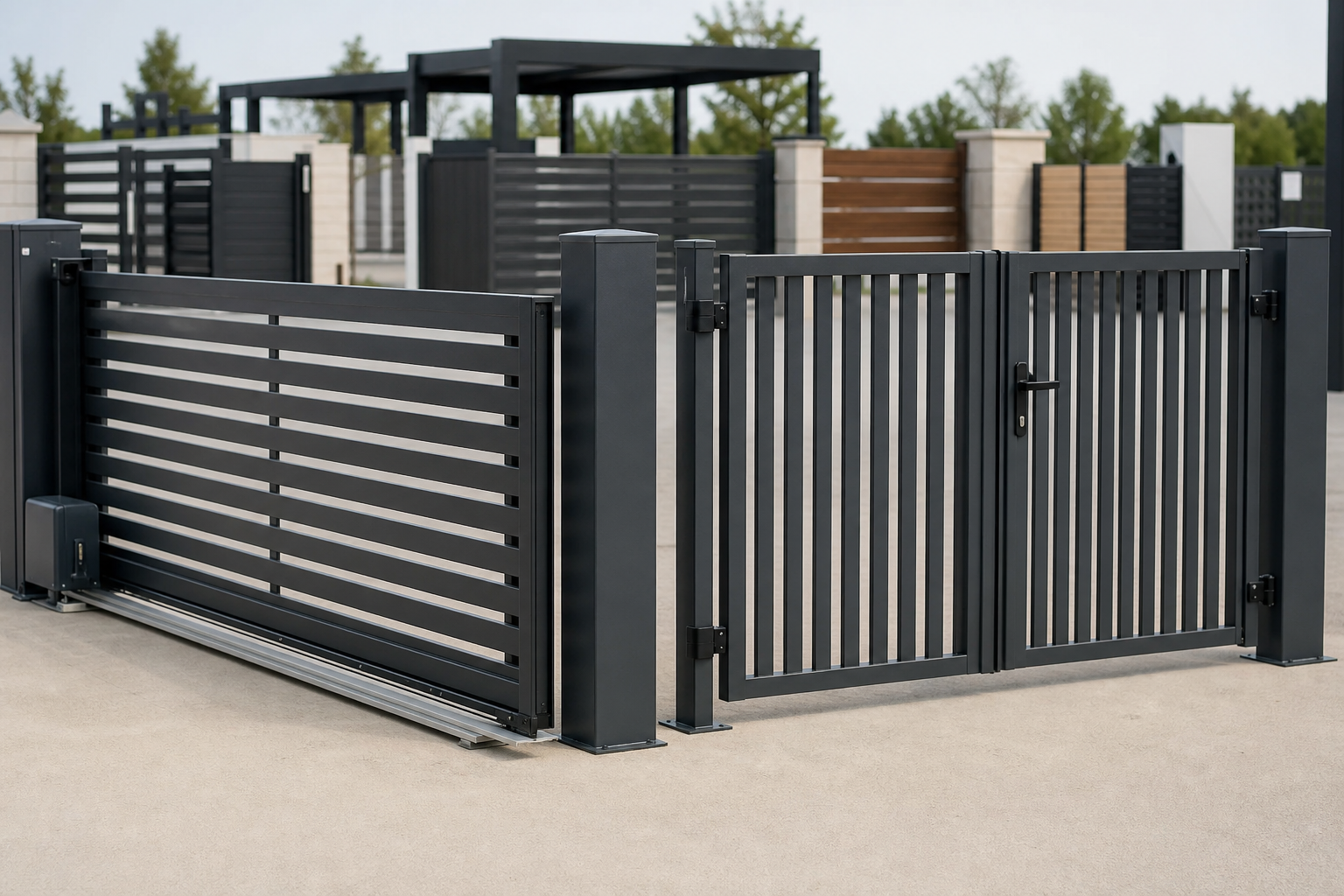
How Sliding and Swing Gates Actually Differ in Installation: A swing gate pivots on hinges mounted to side posts and opens across a clear arc. A sliding gate moves horizontally along a track or with more complex hardware beside the opening. The big difference is simple – swing gates need open space in front of or behind the gate, while sliding gates need room to the side.
Swing gate mechanics: hinges, posts, and clearance arc
Swing gates tend to be the lower upfront-cost option, and they work well on flat, open driveways. Because the weight hangs on the hinges, the posts and footings have to be set correctly or the gate will start sagging over time. For many residential driveways, that simple layout is part of the appeal, according to Fresno Top Gate Repair And Install.
Sliding gate mechanics: track systems and more complex hardware
Sliding gates usually cost more to install and own than swing gates because they have more parts and often need track work and more complex hardware and track installation. Ground tracks can collect dust and debris, which is one reason many high-cycle entrances use alternative sliding configurations instead. One safety point also matters here – horizontal sliding gates are being addressed in California occupational safety rulemaking under a March 2025 discussion draft (Source: California DIR, OSHSB).
What the installation process looks like for each
When people compare driveway gate pros and cons, they usually want to know what the job actually involves. For operators like LiftMaster, DoorKing, or FAAC, the core steps are different depending on the gate style. Automatic gate installation costs vary widely, and site conditions matter a lot more than most online estimates suggest.[1]
- Pouring concrete footings for posts or support columns.
- Setting a track system for a sliding gate, or hinge posts for a swing gate.
- Mounting rollers, more complex sliding hardware, or heavy-duty hinges.
- Calibrating the operator motor to match the gate weight and movement.
| Feature | Swing Gate | Sliding Gate |
|---|---|---|
| Clearance Needed | Arc space | Lateral space |
| Ground Track Required | ✗ | ✓ |
| Upfront Cost | Lower | Higher |
Which Gate Type Works Best for Short, Narrow, or Sloped Driveways?
Which Gate Type Works Best for Short, Narrow, or Sloped Driveways? For short or narrow driveways, a sliding gate is usually the better choice. Swing gates need a wide, unobstructed arc to open fully, which takes up valuable driveway space. Sliding gates move along the fence line and only need room beside the opening. On an upward slope, sliding gates also tend to behave better because they are not trying to swing through a rising grade.
For short or narrow driveways, a sliding gate usually makes more sense because it does not eat into parking depth. If you are working with a tight front yard, a shallow setback, or a driveway that already feels cramped, a swing gate can create daily headaches. That is why many homeowners looking for the best gate for residential driveway use end up choosing a sliding layout.
The clearance problem most homeowners overlook
Many property owners do not notice clearance issues until after the gate is already installed. If the driveway is shallow, a swing gate can force drivers to wait in the street while the panels open. A sliding gate avoids that problem, but it still needs enough side room for the gate to retract fully.
Sliding gates on slopes: why they hold the advantage
The differences between slide and swing gates become obvious on uneven ground. Swing gates can drag or bind on an upward slope, and that extra resistance can wear out the operator faster. Sliding gates travel parallel to the grade, so they usually handle slope changes more cleanly, as noted by Fresno Top Gate Repair And Install.
| Feature | Swing Gate | Sliding Gate |
|---|---|---|
| Space Requirement | Deep arc | Long lateral run |
| Slope Tolerance | Lower | Higher |
| Typical Cost | Lower | Higher |
Decision rule: matching gate type to your property layout
When you are weighing driveway gate pros and cons, this simple check can help avoid a bad fit:
- Measure your depth – if the driveway is short, a sliding gate often works better.
- Check the grade – if the ground rises toward the house, a swing gate may bind.
- Verify side space – if there is no pocket or run space beside the opening, a sliding gate may not be practical.
Real-World Failure Modes: Heat, Dust, and High-Cycle Wear
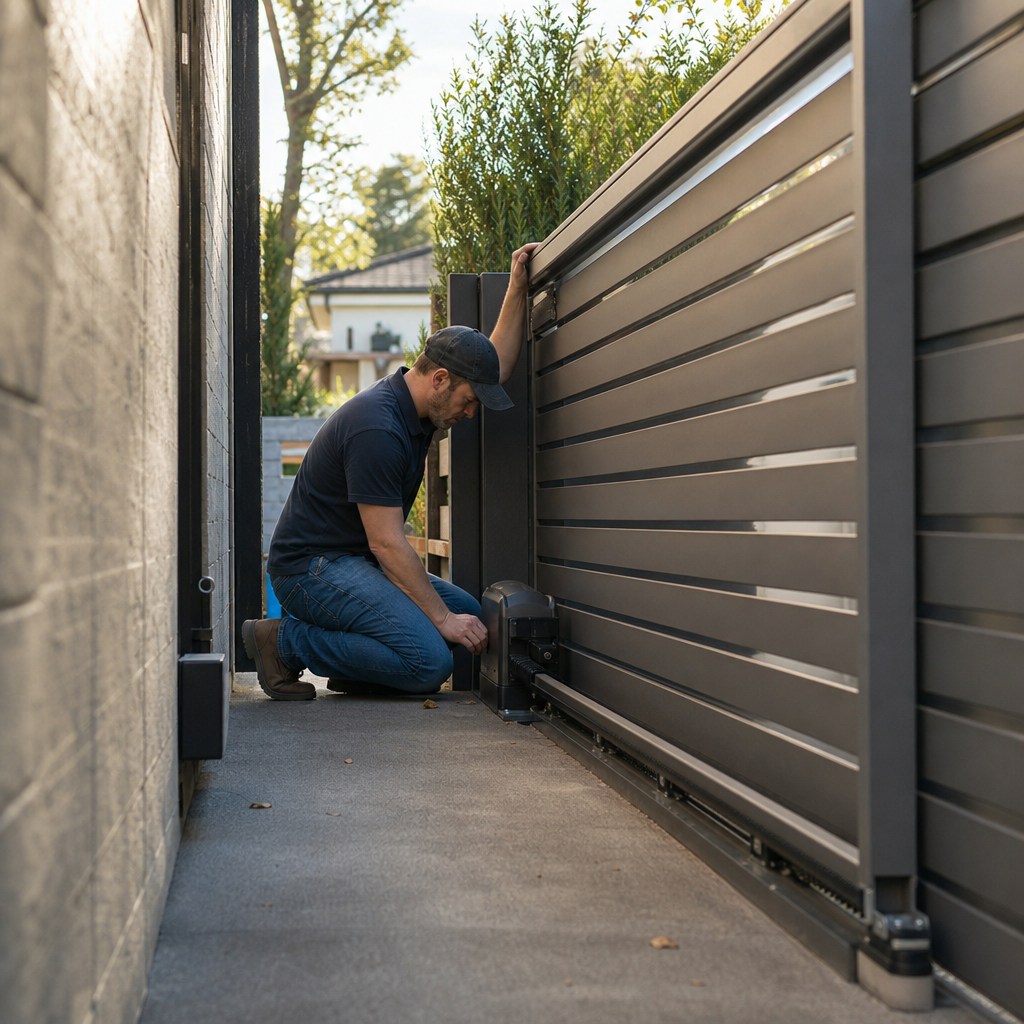
Real-World Failure Modes: Heat, Dust, and High-Cycle Wear: In areas with hot summers and dusty conditions, the biggest gate problems are heat expansion, dust buildup, wind stress, and heavy daily use. Sliding gate tracks can expand and bind in very hot weather. Dust from nearby fields can clog rollers and tracks. Swing gate hinges can drift out of alignment after repeated wind exposure. On busy commercial sites, those real-world conditions matter alongside the original design.[5]
A gate has to survive local conditions, not just look good in a quote. When you compare a sliding gate vs swing gate installation, it helps to think about how each system will hold up after years of heat, dust, and frequent openings.
How hot summers stress tracks and hinges
Thermal expansion matters more than many owners expect. Steel parts expand in extreme heat, and if the gate was not set up with proper tolerances, that movement can lead to binding, noisy operation, or motor strain. A careful install helps, but the gate style still needs to match the site, a point emphasized by Fresno Top Gate Repair And Install.
Dust and debris: the hidden enemy of sliding gate rollers
Dust builds up fast in ground tracks in dry climates. Once debris starts collecting, rollers have to work harder and the gate can begin to stick. Regular cleaning helps, but the maintenance burden is real, especially on properties with dirt driveways or nearby landscaping that sheds leaves and gravel.
Wind load and swing gate alignment drift over time
Wind pushes on solid gate panels like a sail. Over time, that pressure can loosen hardware or shift alignment enough that the latch no longer lines up cleanly. On exposed properties, that can turn into a recurring service call.
High-cycle commercial use: which system holds up longer
For properties that open and close hundreds of times a day, sliding systems often hold up well because they spread stress differently than a swing setup. That is one reason property managers often prefer them for high-traffic or high-cycle entrances, parking lots, and gated communities. When you are choosing the best gate for residential driveway use or planning a commercial entry, the long-term service pattern matters as much as the first installation invoice.
| Gate Type | Maintenance Requirements | Primary Environmental Risk |
|---|---|---|
| Swing Gates | Hinge lubrication and post inspection | Wind-induced alignment drift |
| Sliding Gates | Track cleaning, roller replacement, and alignment checks | Heat expansion and dust binding |
Cost Breakdown: Is a Sliding Gate More Expensive Than a Swing Gate?
Cost Breakdown: Is a Sliding Gate More Expensive Than a Swing Gate? Yes, sliding gates usually cost more to install than swing gates. The extra cost comes from track hardware, more moving parts, and more involved operator mounting. Upfront price is only part of the story, though.
A swing gate is often cheaper to build because the mechanics are simpler. It does not need a track system, and that keeps the installation more straightforward. Sliding systems cost more because the hardware is more complex and the site prep is usually more demanding.
Upfront installation costs compared
Automatic gate pricing varies a lot based on gate size, operator type, and whether the site needs grading or new concrete. Commercial-grade operators from brands like Viking, Ramset, and All-O-Matic also vary by cycle rating, so two gates that look similar on paper can cost very different amounts to build.
Long-term maintenance and repair cost differences
| Gate Type | Initial Cost | 10-Year Repair Risk |
|---|---|---|
| Swing | Lower | Higher, especially where wind and hinge wear are constant |
| Sliding | Higher | Lower if the track or rollers stay clean and aligned |
Total cost of ownership over 10 years
The cheapest install is not always the cheapest gate to own. A swing gate may save money on day one, but repeated hinge repairs, alignment adjustments, or wind-related damage can add up. A sliding gate may cost more at the start, yet it can be the better long-term choice on busy or exposed properties.
How to Choose the Right Gate for Your Property
Choosing the right gate means looking at slope, clearance, daily cycle count, and local exposure to wind and dust. A bad fit can lead to breakdowns, security gaps, and avoidable retrofit costs. For homeowners, that can mean a gate that stops working when you need it most. For commercial managers, it can mean traffic backups and frustrated tenants.
Five-point checklist before you commit
- Measure available clearance and side space.
- Check the driveway slope.
- Estimate how many times the gate opens each day.
- Think about wind, dust, and debris around the site.
- Set a 10-year budget instead of looking only at the install price.
When to default to a sliding gate
Sliding gate systems make the most sense when space is tight, the driveway slopes, the site sees heavy traffic, or the property gets a lot of wind exposure. They are also a strong option for entrances that need reliable daily movement.
When a swing gate is the smarter pick
A swing gate is often the better choice for a flat, open driveway where there is plenty of clearance and the owner wants a simpler, lower-cost installation. For many residential properties, that is still the cleanest and most practical setup.
If you are still weighing the driveway gate pros and cons, a site visit is the best next step. A qualified installer can review your layout, explain the trade-offs, and provide a written estimate for your sliding gate vs swing gate installation.
Frequently Asked Questions About Sliding Gate and Swing Gate Installation
Most questions about sliding gate vs swing gate installation come down to space, upkeep, and reliability. The right answer depends on how the property is used and what kind of site conditions the gate has to handle day after day.
- Which gate type is better for a short or narrow driveway? A sliding gate is usually the better fit because it does not use up driveway depth with a swing arc.
- Is a sliding gate more expensive to install than a swing gate? Usually yes. Sliding gates need more hardware and often more site prep, so the upfront cost is typically higher.
- Can a swing gate be installed on an upward sloping driveway? Sometimes, but it is often a poor fit. The gate can drag or bind, which may lead to extra wear or custom modifications.
- What are the maintenance differences between sliding and swing gates? Sliding gates need track cleaning, roller checks, and alignment service. Swing gates need hinge lubrication and post inspection.
- Which gate system is more reliable for long-term residential use? On a flat, open driveway, a swing gate can be very reliable. On a slope or a tight lot, a sliding gate is often the better long-term choice.
- Are there special regulations in California? Yes. Horizontal sliding gates are being addressed in California occupational safety rulemaking under a March 2025 discussion draft (Source: California DIR, OSHSB).
“`
Sources
- How Much Does Automatic Gate Installation Cost? [2026 Data] | Angi – angi.com (2026)
- How Much Does an Automatic Driveway Gate Cost in 2026? – lawnstarter.com (2026)
- How Much Does Gate Installation Cost? [2026 Data] | Angi – angi.com (2026)
- How Much Does Automatic Driveway Gate Installation Cost in 2025? – homeadvisor.com (2025)
- Matching Gate Type To… – georgiagateandfence.com
Related reading: Cost of Gate Installation in Fresno – Budget Right Before You Buy
Frequently Asked Questions
How do the upcoming 2025 California safety regulations affect commercial sliding gate installations?
The March 2025 California occupational safety discussion draft addresses specific entrapment hazards associated with horizontal sliding gates. Fresno Top Gate Repair helps property managers navigate these evolving standards by installing compliant safety sensors and structural guards that meet state requirements.
What specific hardware upgrades are necessary for a high-cycle commercial gate environment?
High-cycle sites require industrial-grade rollers and heavy-duty operators from brands like Viking or DoorKing to withstand hundreds of daily activations. Fresno Top Gate Repair recommends these reinforced components to prevent the premature motor burnout often seen with standard residential hardware.
How do sliding and swing gates differ in manual operation during a power failure?
Swing gates typically utilize a manual release key on the actuator arm, while sliding gates often require disengaging a drive chain or internal clutch. To maintain traffic flow, Fresno Top Gate Repair installs integrated battery backup systems that ensure commercial gates remain functional without manual intervention during outages.
About the author
 |
David Ramirez David Ramirez is a certified automatic gate technician with over 12 years of experience in access control systems and high-cycle industrial gate maintenance. He specializes in troubleshooting complex gate motor issues and implementing comprehensive security solutions for both residential and commercial properties. Based in California’s Central Valley, David regularly consults with property managers and HOA boards on improving perimeter security and minimizing gate downtime. |